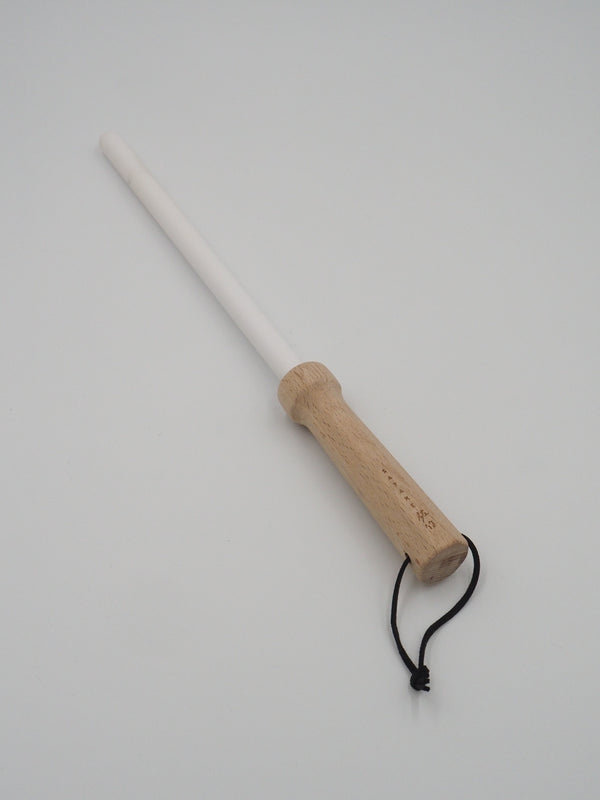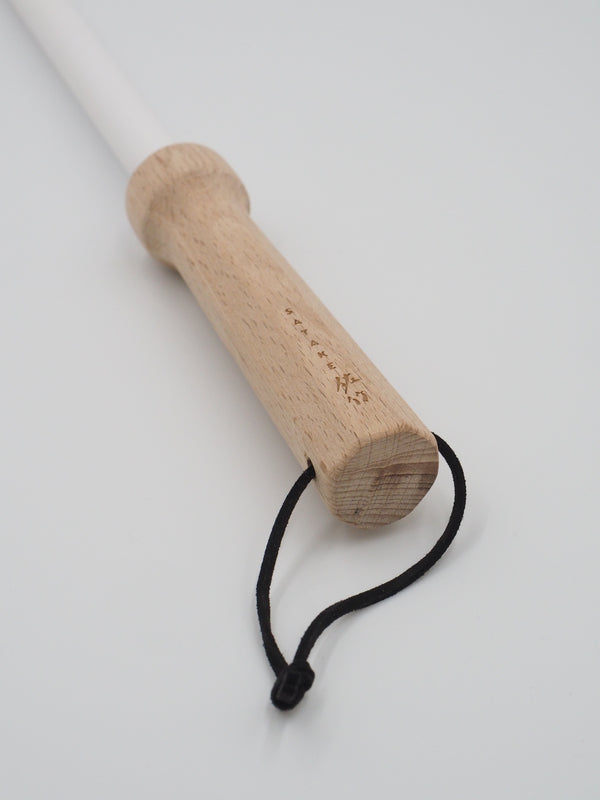


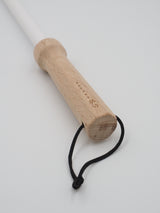
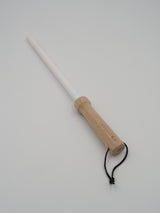
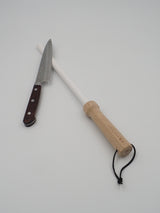
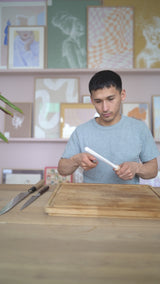

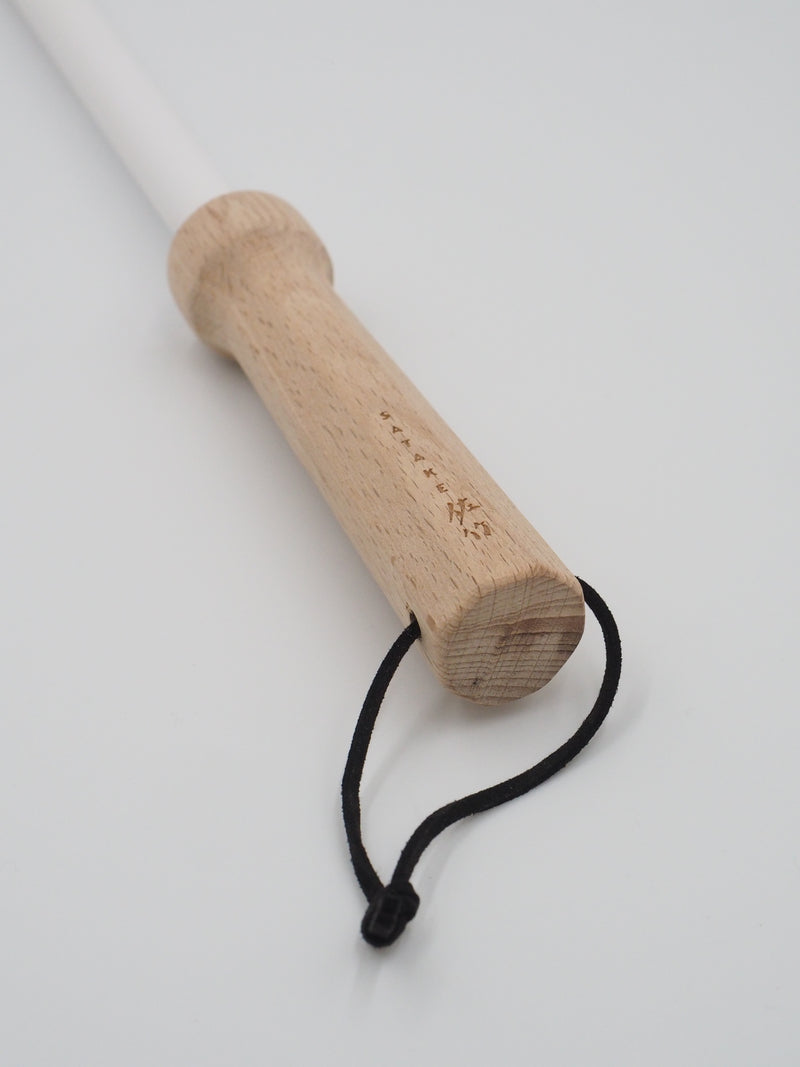

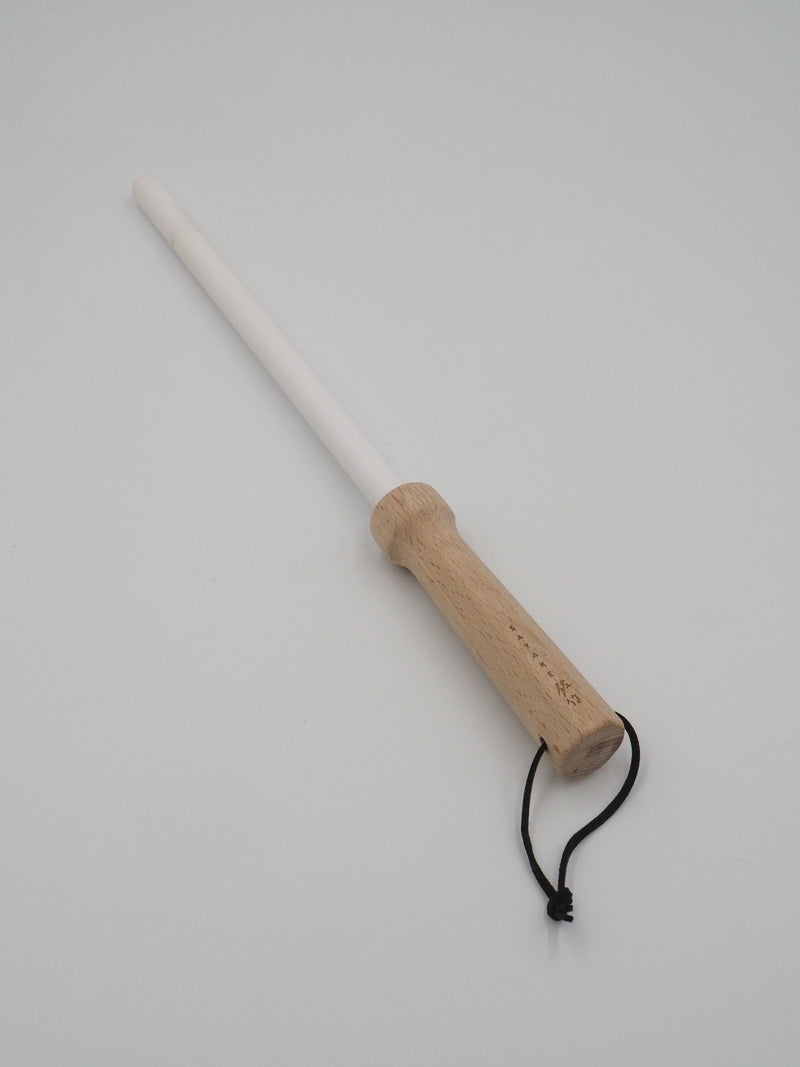

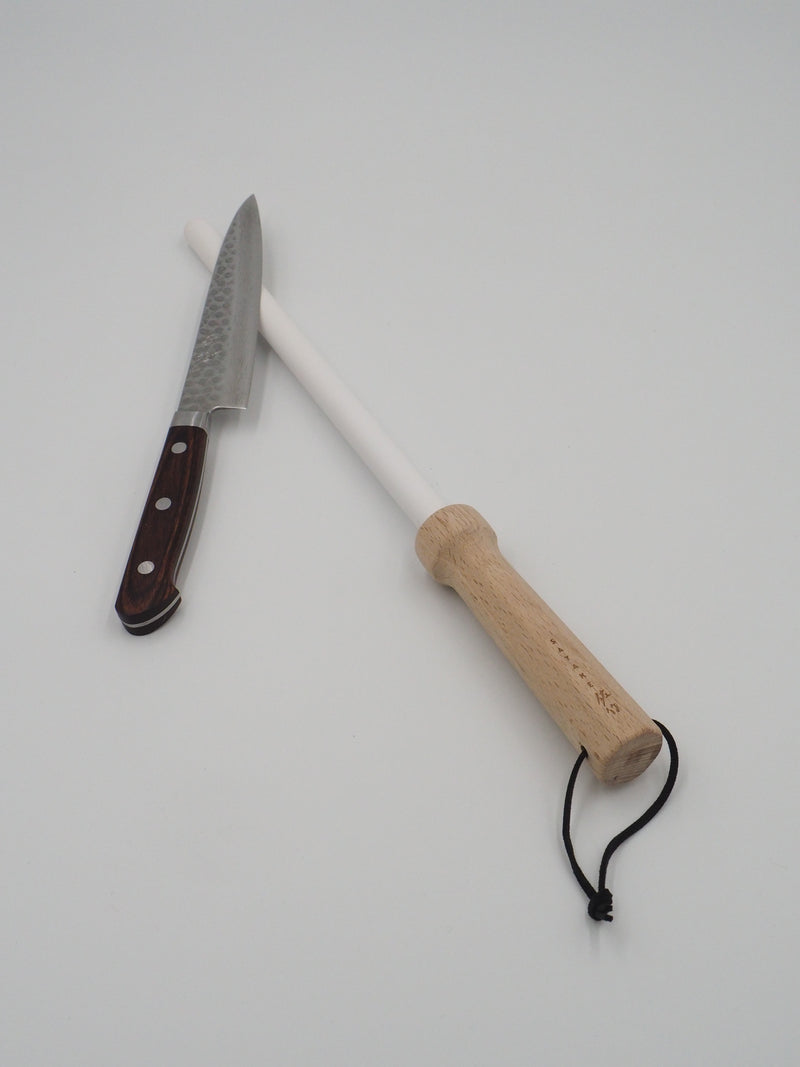

Shaft: Octagonal, bright magnolia wood
Material: Ceramics, Magnolia wood
Dishwasher safe: No
Goal: 24 cm
Our products are suitable and approved for food contact. See the Danish Veterinary and Food Administration's smiley report here.
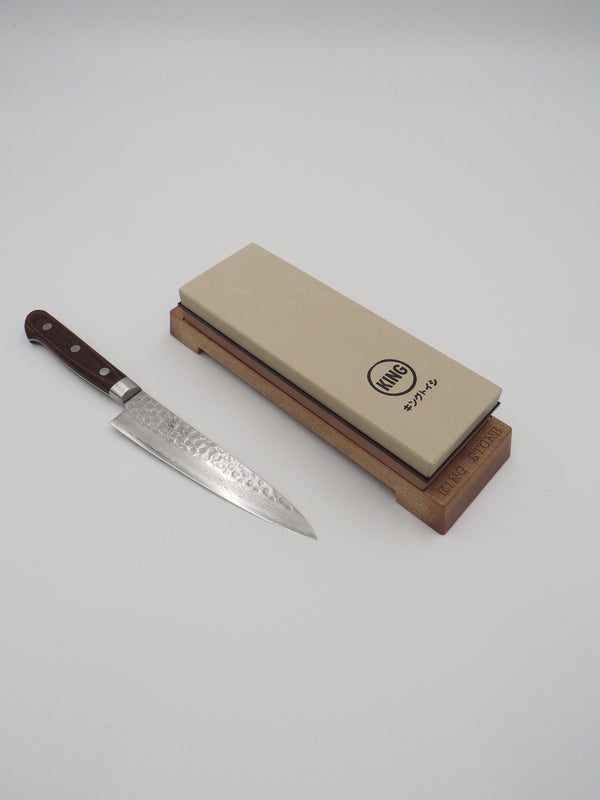
How to maintain your knife
A good knife requires good maintenance if you want to maintain its strength and sharpness throughout its life.
Due to the hardness of the VG10 steel and the stainless capabilities of the damascened layers, you can easily keep your knives sharp for a long time if you follow some simple advice.


Make sure your Japanese kitchen knife is Japanese
Japan is world-renowned for its production of knives and samurai swords – and for good reason. Traditional forging methods have been perfected through generations and are still used today with great precision.
Unfortunately, there are manufacturers who market knives as Japanese without living up to the quality. Our advice is therefore to always carefully research the origin and choose knives from genuine Japanese blacksmiths.
FREQUENTLY ASKED QUESTIONS - AND ANSWERS
Haven't found the answer to your question? We're happy to help you - contact us here .
WHICH KNIFE SHOULD I CHOOSE?
When choosing a new knife, it can be difficult to figure out which one to pick. Most importantly in this context, you should ask yourself what function the knife should have. In other words: what will you use the knife for?
We have compiled an overview of all our knives and their functions, so hopefully you can gain a better understanding of which knife is right for you. Read the full overview here.
WHY CHOOSE A JAPANESE KNIFE?
A Japanese knife is a great choice if you want a tool that can last a lifetime. Our knives are hand-forged using traditional methods in Sakai City, which is highly renowned for the region's more than 600-year history in knife forging.
The solid craftsmanship reflects the quality of our knives, whose specifications include:
- 17 layers of hammered damascus VG10 steel.
- 60-62 HRC (Rockwell hardness scale). Western chef's knives typically have a hardness of 50-55, which means a softer, duller knife that needs sharpening more often.
The blade consists of 17 layers of hammered damascus steel which, in addition to being incredibly beautiful, has the property of protecting the core from rust and wear.
The core itself consists of hard VG10 steel, which was developed by Takefu Special Steel Co., Ltd. VG10 core steel consists of a composition of very pure raw materials, which provides exceptional qualities when it comes to hardness, sharpness, and wear resistance.
All in all, these knives are a solid tool that will surely become your trusted companion in the kitchen. Cooking just gets a little more fun when the tool helps do the work for you. The knives have different characteristics, which you can read about here.
DOES IT MATTER WHERE MY KNIFE IS MADE?
Yes, to a great extent. Genuine Japanese knives are the result of generations of perfected forging techniques, which ensure exceptional sharpness and durability. Unfortunately, there are many cheap copies on the market that are marketed as "Japanese" but are actually machine-produced with, for example, a laser-printed pattern instead of genuinely folded steel.
At Seramikku, we import our knives directly from the traditional regions of Sakai and Seki. They are hand-forged by local masters, which is your guarantee of original Japanese craftsmanship of the highest quality, so you avoid "buying a pig in a poke".
Read the full guide on the importance of the knife's origin here.
HOW MANY LAYERS DOES A GOOD KNIFE HAVE?
More layers do not necessarily mean a better and sharper knife.
The main purpose of the layers is to protect the hard core steel. In addition, it, of course, has aesthetic value.
Professional Japanese chefs always use knives with 3 layers. One hard core encased in 2 protective layers of stainless steel.
Whether a Japanese Damascus knife has 9, 17, 67, or even 300 layers, for that matter, is more a question of aesthetics (and price) than it is an expression of sharpness, hardness, or overall quality.
Our Japanese knives have 17 layers of hammered Damascus VG10 steel, which provides high protection to the steel due to the many layers. Additionally, the layers contribute to the knife's beautiful appearance.
WHAT DOES THE HRC SCALE MEAN?
The HRC scale is a unit of measurement for defining the hardness of a knife blade, developed by the international and recognized Rockwell.
The hardness of the steel is defined and graded, and parameters such as the quality and durability of the steel are also measured.
The scale serves as a good guideline when you are investing in a knife, as it can tell you where on the scale the knife in question is located compared to other knives on the market.
Seramikkus' Japanese knives are made of VG10 steel, which achieves a rating of 60-62 HRC on the Rockwell scale. In comparison, a typical Western kitchen knife is in the range of 50-55 HRC.
Extend the life of your knife
How to maintain your knife
A good knife requires proper maintenance if you want to maintain its strength and sharpness throughout its life.
Due to the hardness of VG10 steel and the rust-resistant properties of the Damascus layers, you can easily keep your knives sharp for a long time by following some simple advice.

RELATED GUIDES
OTHERS HAVE ALSO READ


★★★★★
Beautiful posters and ceramics at Seramikku
Have bought both posters and ceramics from Seramikku/Taisho several times - beautiful motifs, no chips or broken ceramics! Great quality all the way through. And super fast delivery!
- Anne, Trustpilot
★★★★★
Japanese quality and good Danish service
Before purchasing the fine Japanese tool boxes online, I had a question, which was quickly answered with additional pictures. The order was shipped immediately and the quality does not disappoint. They are so well made that I expect to have them for the rest of my life.
- Annette, Trustpilot
★★★★★
Sweet and helpful and very service-minded!
When purchasing a wedding gift, we experienced great helpfulness - and service that was beyond the ordinary! They did everything they could to ensure that the gift arrived on time, even though it was out of stock and they had to get it home first. 5 stars from here!
- Margit, Trustpilot
★★★★★
Seramikku has the most beautiful selection of Japanese ceramics.
Everything can be mixed and there is plenty of image inspiration on the website etc.
Online shipping is fast and secure.
I haven't bought any Japanese ceramics from Seramikku yet.
- Busk-Johansen, Trustpilot
★★★★★
Fantastically fast shipping and very beautiful products.
I ended up ordering a fairly large order because I couldn't choose, and all the items were a great joy. So everything is kept. And so wonderful to receive the bowls wrapped in Japanese newspapers.
- Susanne, Trustpilot
★★★★★
Just shopped at Seramikku for the first time.
Fast receipt of the finest goods in the best quality. If you follow Seramikku on insta or read a little deeper into the webshop you get the finest info about Japan. Super good style! You get a really good impression of the people behind Seramikku!
Well done 🌟
- Theresa, Trustpilot