

How to choose the right knife
When choosing a new kitchen knife, it can be difficult to figure out which model best suits your needs. Most importantly, you need to ask yourself what function the knife should have in your kitchen. In other words: What will you primarily use it for?
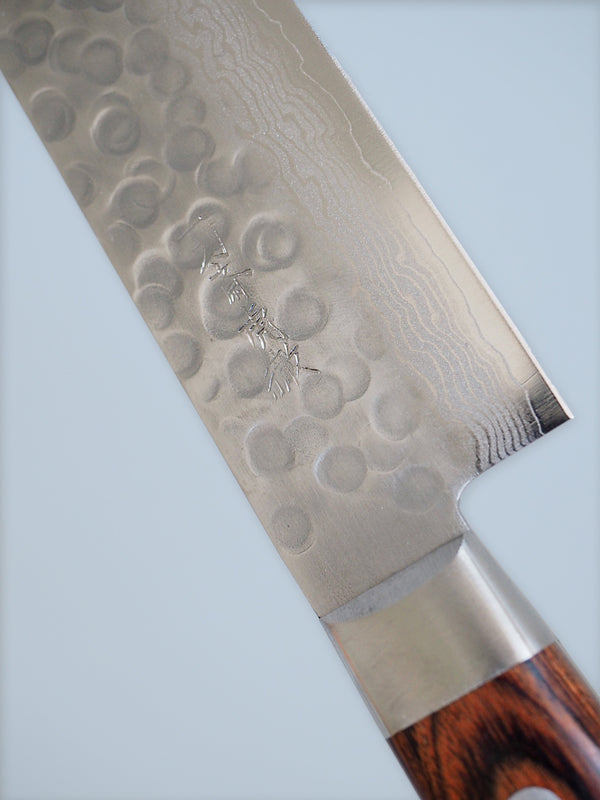
Common to all Seramikku's Japanese knives is that they are hand-forged in Japan by local knife smiths using proud, traditional techniques. Each individual knife is made of 17 layers of hammered, damascened VG10 steel with a hardness of 60-62 HRC on the Rockwell scale.
Below, we have compiled an overview of our hand-forged knives and their characteristics, so you can find the perfect companion for your daily kitchen rituals.
Petty Knife / Paring Knife
The paring knife is also called a Petty knife and is ideal for smaller ingredients in the kitchen. You can use it when slicing or preparing small vegetables and fruits that require a steady hand and high precision.
For example, use the heel of the blade to gently remove blemishes from potatoes and similar items.
The knife is also fantastic as a small cheese/sausage knife or for scoring the skin of roast pork or vegetables.
Find it here in pakka wood, black or mahogany.
Utility Knife
The utility knife is also called a paring knife and, as the name suggests, is fantastic for smaller ingredients. The knife is ideal for many small tasks in the kitchen and will quickly become one of your favorite knives for everyday use.
Use it to cut or prepare small vegetables, fruits, and herbs. It is also suitable for cutting or filleting smaller pieces of meat and fish.
The utility knife will quickly become one of the most used knives in your kitchen.
Find it here in black or mahogany.
Nakiri Knife
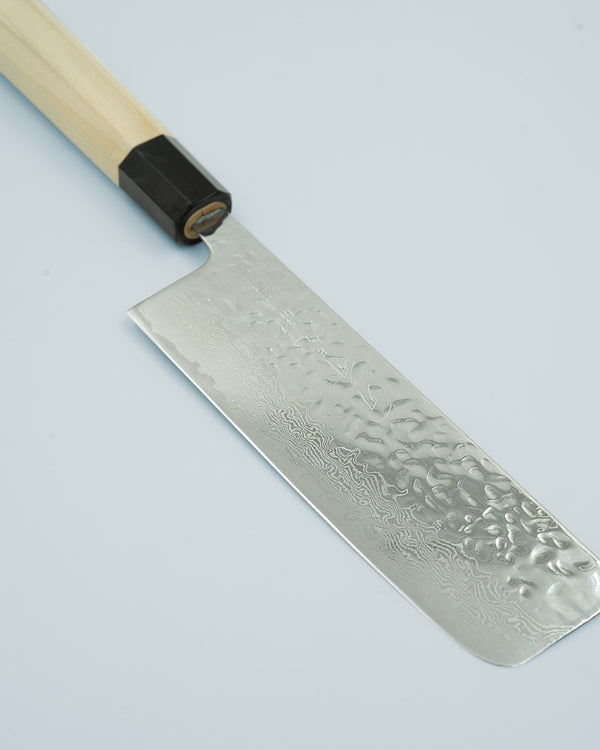
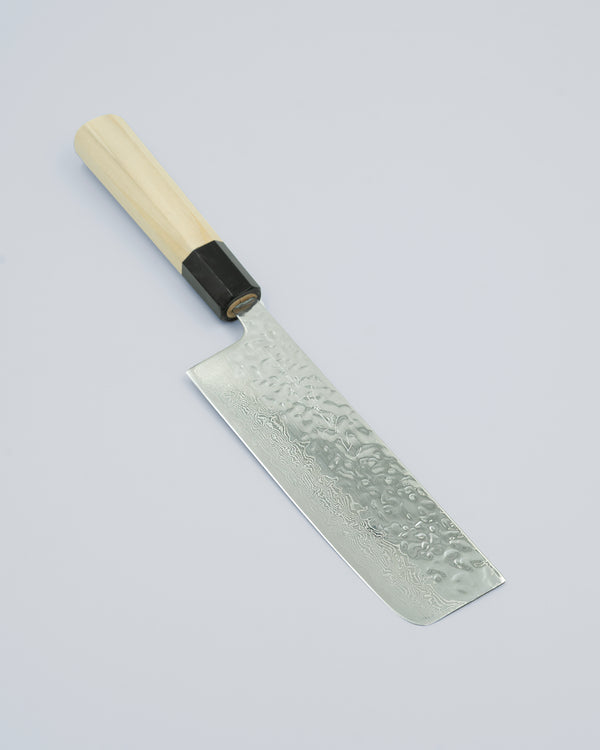
Nakiri (菜切り) means vegetable knife. It is the traditional Japanese vegetable knife, indispensable in Japanese cuisine - and Asian cuisine in general.
Here you get the perfect vegetable knife, which with its rectangular blade makes it easy to cut both large and small vegetables. The height of the blade allows you to safely guide your knuckles along the blade, giving you good control over the knife's movements.
The knife can be used to split large vegetables, but is also ideal for finely sliced vegetables. For example, use it to cut precise julienne or brunoise strips.
Find it here in pakka wood, black or mahogany.
Santoku Knife
Santoku (三徳) loosely translates to "three virtues" and refers to the knife's versatility, as it is suitable for fish, meat, and vegetables. The Santoku knife is a versatile kitchen knife designed for chopping, slicing, and dicing a wide variety of ingredients.
The knife's high blade provides ample room for your fingers, allowing you to safely guide your knuckles along the blade and control the knife's movements. At the same time, the blade's length of 18 cm makes it possible to cut ingredients with long, gliding movements. The pointed tip also makes it easy to work precisely with even the smallest ingredients.
The Santoku knife is the Japanese all-purpose knife, perfect for any kitchen.
Find it here in pakka wood, black or mahogany.
Gyūto Knife
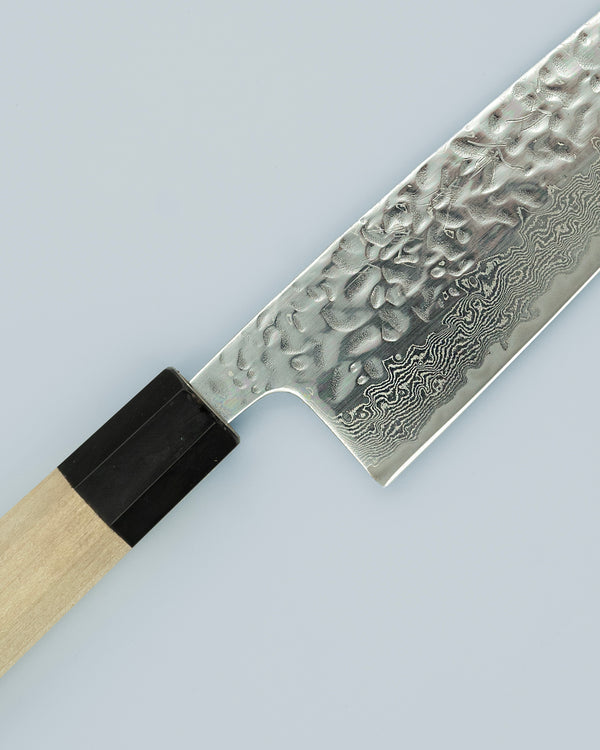
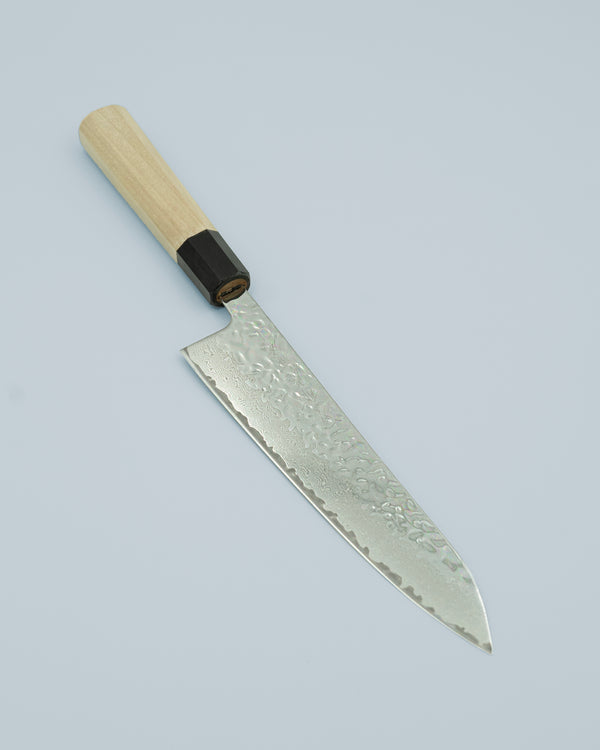
Gyūto (牛刀) means "beef sword" in Japanese and corresponds to what is known in the West as a traditional chef's knife. Despite the name, it is a very versatile knife that can be used for meat, fish, and vegetables.
With its long 21 cm blade, you will truly experience how the knife does the work for you when cutting with long, gliding movements. The height of the blade provides ample room for your fingers, allowing you to guide your knuckles along the blade and control the knife's movements when chopping and slicing vegetables.
The Gyūto knife is the chef's go-to knife!
Find it here in pakka wood, black or mahogany.
Sujihiki Knife
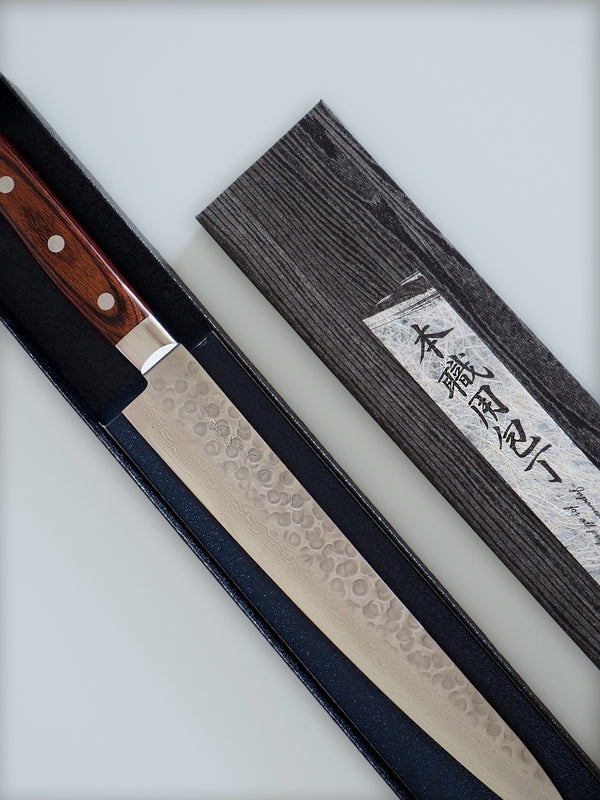
Sujihiki (筋引) literally means "muscle puller" and refers to the pulling motion the knife is designed for. With its long, narrow 24 cm blade, the knife is ideal for filleting meat and fish with long, precise cuts.
Use it to trim meat cuts or to skin and fillet fish – for example, for sushi and sashimi. The knife also functions as a carving knife and is therefore particularly suitable for carving a finished roast or poultry.
With the Sujihiki knife, you will experience how the knife almost does the work for you when you work with long, controlled cuts.
Find it here in pakka wood, black or mahogany.